Heat pumps in Denver, CO & nearby towns
Heat Pump Installation in Arvada, CO
Heat Pump Installation Denver is a free referral service that connects Arvada homeowners with one insured local installer for a free, no-obligation installation estimate. In Arvada, the paperwork shapes the schedule more than people expect, because the city lists heat pumps among the appliances that need an issued permit before work begins. Here's how that plays out, what the age of your house tends to raise, and where the 2026 money stands.
- Free installation estimate
- Insured local installer
- No obligation
Free Heat Pump Estimate
The installer sees your house, then quotes. No obligation.
Insured Local Heat Pump Installer
We connect you with one independent Denver-area installer
One Call, Not a Call List
Your details go to one installer, not a pile of sales calls
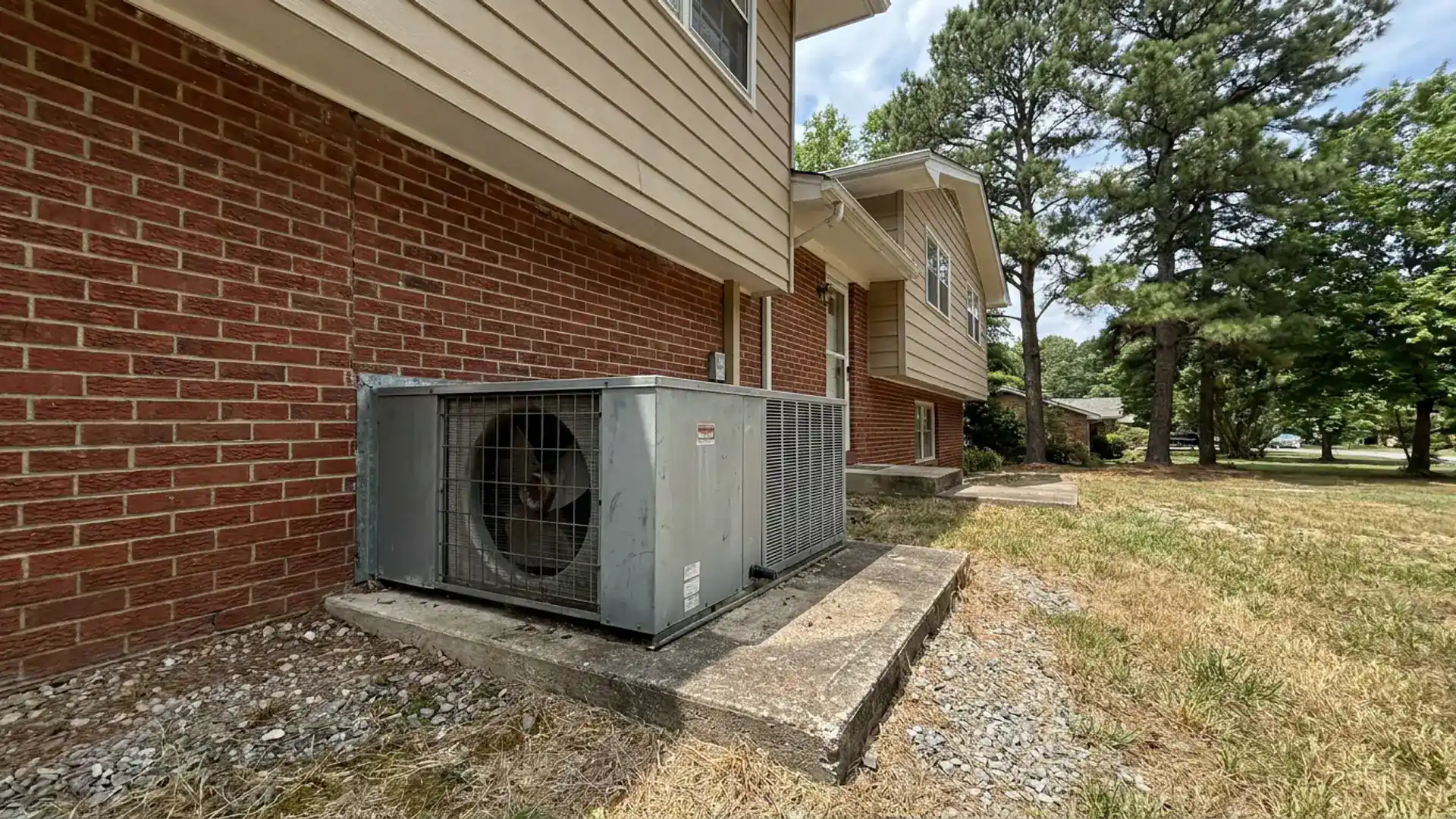
The Arvada Residential Mechanical & Plumbing page, checked in September 2026, names heat pumps among the new and replacement mechanical appliances that need an approved, issued permit before the work starts. Not after. Not "we'll file it next week." Before.
That page has two more details you should know. When a contractor applies online, the city requires that contractor to hold an active Arvada license, while homeowners who pull their own permit skip the online route and apply through the city Building Safety division instead.
So ask one question at the estimate. Who's pulling the permit, and how? If the installer plans to apply online, you can ask about their Arvada license and check it with the city yourself. We don't make licensing claims about anyone. We connect you with an insured installer, and the license question is one you're entitled to ask the city directly.
One more wrinkle. This rule belongs to Arvada, and it only applies if your parcel actually sits inside city jurisdiction, so confirm the exact address before anybody files anything. Other towns do it their own way; see how Broomfield handles heat pump permits for one example.
So what happens first, and what happens last?
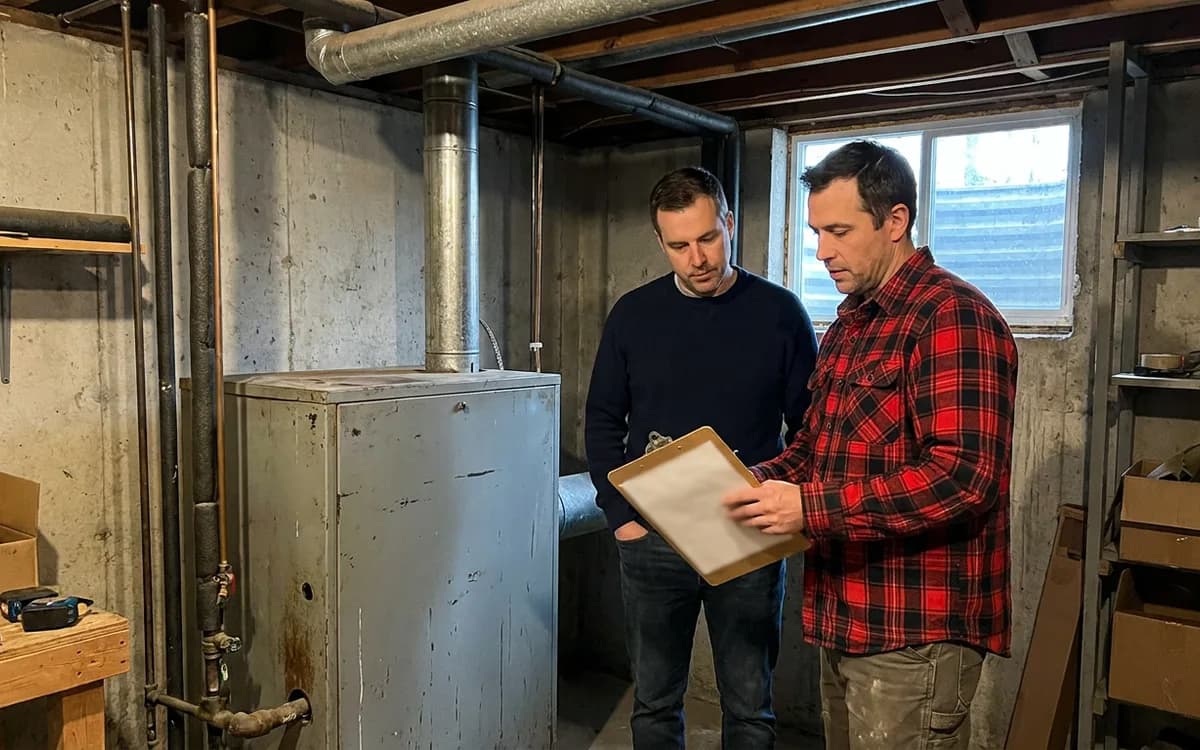
Most heat pump headaches come from doing things out of order. Here's the sequence that fits the Arvada rules:
- First, the installer visits, measures and prices your actual house. A number over the phone isn't a quote, because the price depends on what they find.
- Then you make the big choices. Ducted or ductless? All-electric, or dual-fuel with your gas furnace kept as backup?
- Next, the application goes in and the permit gets issued. The work waits for it.
- After that, the equipment goes in, the refrigerant lines get run and any electrical work gets done.
- Last comes inspection and closeout, so ask up front who schedules whatever inspection the permit calls for and whether you'll need to be home.
If someone offers a start date that falls before the permit step, ask why. It may just be a scheduling guess. In Arvada, though, the permit comes first. Keep your final invoice somewhere safe, too. The money section below explains why.
What will the installer poke at in a 1960s or 1970s house?
Arvada houses are older than newcomers tend to assume. According to Census ACS 2024 5-year data, the median home was built in 1979, and of 52,169 housing units, 25.6% were built in the 1970s and another 16.0% in the 1960s. If yours is one of them, a few questions come up nearly every time.
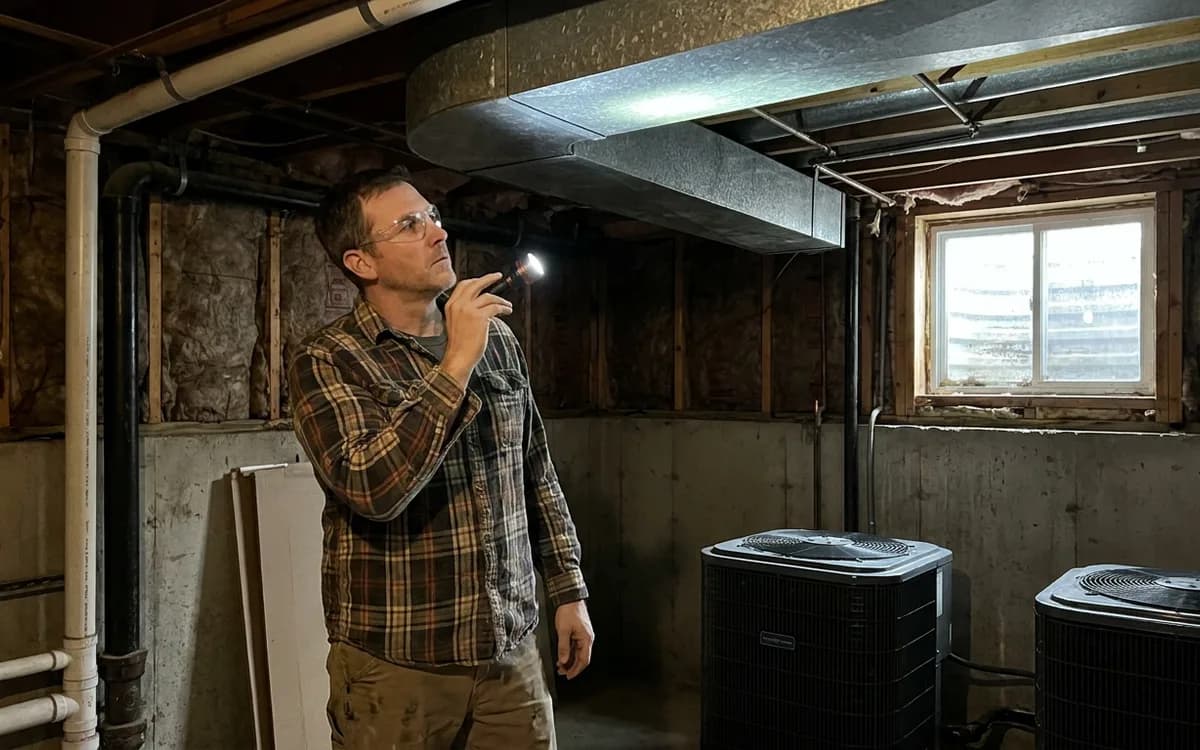
Start with the ducts. The installer checks the existing ductwork: its size, its condition and whether it can handle the system being proposed. If it can't, a ductless system with indoor heads can be the simpler route, and nobody has to open up your ceilings.
Older electrical panels deserve a close look, too. The installer checks panel capacity and whether the heat pump needs a new circuit. If an upgrade turns out to be necessary, that changes the price, and you'd much rather find that out at the estimate, standing in your basement with the installer, than on install day with a crew waiting in the driveway.
Then there's sizing. Don't let anyone size your new system off the label on the old furnace. A proper install starts with a room-by-room load calculation, called a Manual J. If you've replaced windows, added insulation or finished the basement since the house went up, the old unit size tells you even less.
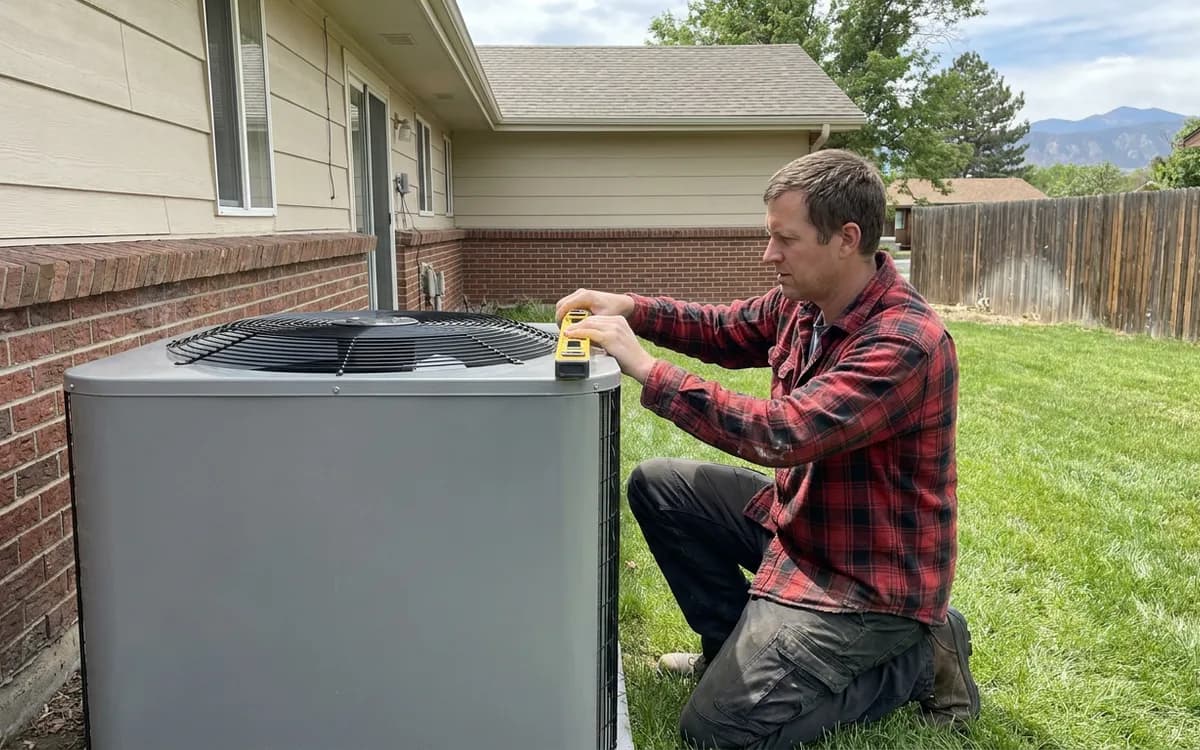
Finally, placing the outdoor unit means thinking about snow, drainage and clearance. The installer also plans the refrigerant line route and where the condensate will drain. None of it's glamorous. All of it shows up later if it's done badly.
Is there still money on the table for a 2026 install?
Some. It's all dated, so treat this as a snapshot from September 2026:
- For an air-source heat pump installed in 2026, the Colorado heat pump credit is $1,000. A state-registered contractor claims it and must pass at least $333 to you as an invoice line labeled "State of Colorado Heat Pump Discount." That $333 is your guaranteed floor, not the full $1,000, so ask whether your installer is on the state's registered list.
- If Xcel is your utility, the Xcel 2026 rebate summary effective Oct. 1, 2026 lists $750 per heating ton at 5°F on the standard tier for a qualifying ducted or mixed cold-climate air-source heat pump, or $1,500 with the bonus. The bonus requires an invoice dated in 2026. It isn't available if your existing primary heat is electric. You'll need an Xcel participating contractor.
- The federal credit is gone for 2026 installs, because the IRS credit covered improvements made through Dec. 31, 2025. Send tax questions to a tax professional.
- The state income-qualified rebate is closed to single-family homes on the Front Range, as of the August 2026 state update.
Confirm your eligibility with your utility or installer before you count on any of it. The 2026 rebates guide has the details, and the Denver heat pump cost guide covers price.
Who actually shows up when you ask for an estimate?
One independent, insured local installer. It won't be us. We're a referral service, not the contractor, the city, a utility or an energy advisor. Call (303) 529-8713 or fill out the form, and we'll connect you with one installer for a visit to your house.
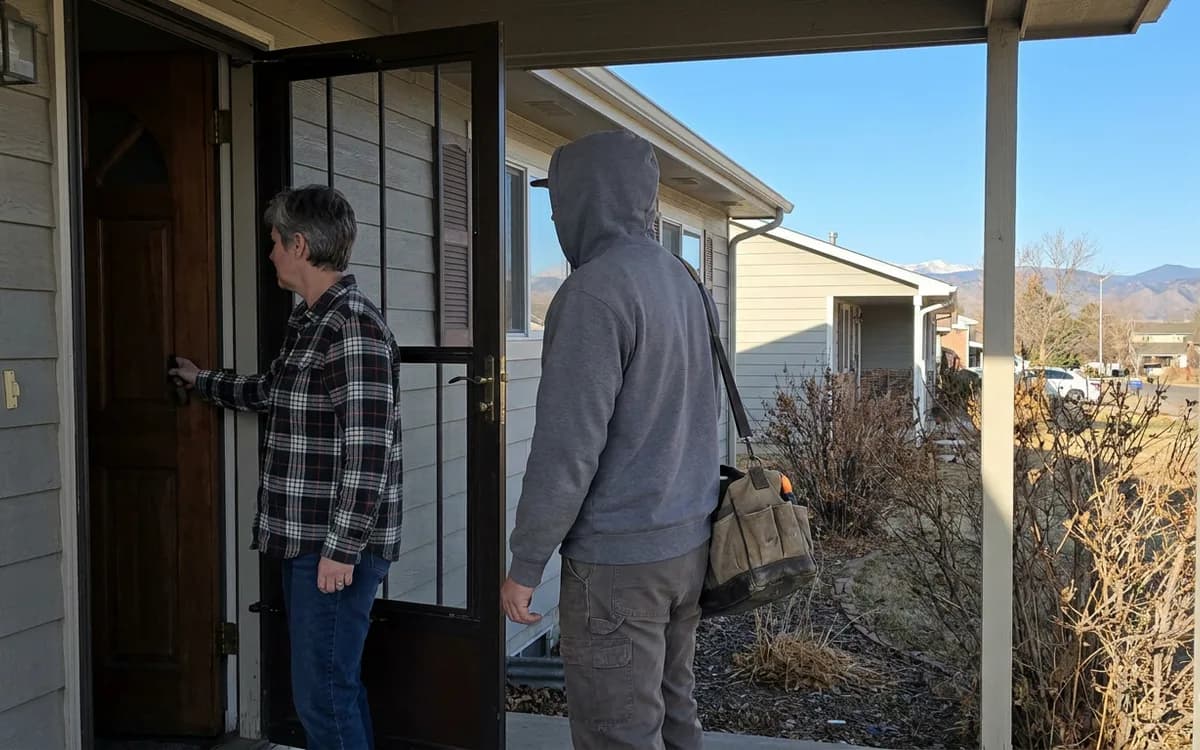
The installer sets the price after seeing the house, which is the whole point of the visit: ducts, panel, outdoor placement and the permit path all feed into a number that nobody can responsibly give you from a phone call. The estimate is free. There's no obligation to go ahead.
Bring a short list to the visit:
- Who's pulling the Arvada permit, and is it an online contractor application or a homeowner application?
- Are you on the state's registered list for the heat pump discount?
- If Xcel is my utility, are you an Xcel participating contractor?
- Will you do a Manual J, and what did you find in my ducts and panel?
If you want a neutral sounding board, Power Ahead Colorado, a DRCOG program, offers free energy advisors. They're a good call before you sign anything big.
When you're ready, Get Free Estimate or call (303) 529-8713. You can also see the rest of the towns we cover on the service areas page, or read more about heat pump installation around Denver.
Ask Away
Heat Pump Installation Questions
Do I need a permit to install a heat pump in Arvada?
Yes, if the property falls under City of Arvada jurisdiction. The city's Residential Mechanical & Plumbing page, checked in September 2026, lists heat pumps among the new and replacement mechanical appliances that need an approved, issued permit before work starts. Confirm the exact address first, because a parcel outside city jurisdiction falls under a different office's rules.
Who can apply for a heat pump permit in Arvada?
Per the city Residential Mechanical & Plumbing page (September 2026), a contractor applying online must hold an active Arvada license. Homeowners applying for their own permit go through the city's Building Safety division. At your estimate, ask the installer who'll pull the permit and how, and check any license question directly with the city.
My Arvada house was built in the 1970s. Will I need new ducts or a panel upgrade?
Nobody can tell you that honestly without seeing the house. The installer checks your existing ductwork, your electrical panel's capacity and whether a new circuit is needed, and sizes the system with a room-by-room load calculation rather than copying the old furnace. For a free estimate from one insured local installer, call (303) 529-8713 or use the free estimate form.
Do Denver's permit rules or group-buy program apply to my Arvada home?
No. Denver permit rules apply to parcels in Denver, and the City of Denver group-buy program is for qualifying Denver homeowners, so neither carries over to an Arvada address. Arvada has its own permit requirements for heat pumps. For 2026 rebate details that do reach beyond city lines, see the Denver heat pump rebates guide.
Thinking about a heat pump?
We'll connect you with one local, insured heat pump installer. They see the house, then set the price. No obligation to buy.