Heat pumps in Denver, CO & nearby towns
Heat Pump Installation in Aurora, CO
Heat Pump Installation Denver connects Aurora homeowners with one independent, insured local installer for a free, no-obligation heat pump installation estimate. We're a referral service, not the contractor. The installer looks at your house and sets the price. Most Aurora houses have some history you should understand before that visit, so here is the walk-through we would want if it were our place. Call (303) 529-8713 or Get Free Estimate.
- Free installation estimate
- Insured local installer
- No obligation
Free Heat Pump Estimate
The installer sees your house, then quotes. No obligation.
Insured Local Heat Pump Installer
We connect you with one independent Denver-area installer
One Call, Not a Call List
Your details go to one installer, not a pile of sales calls
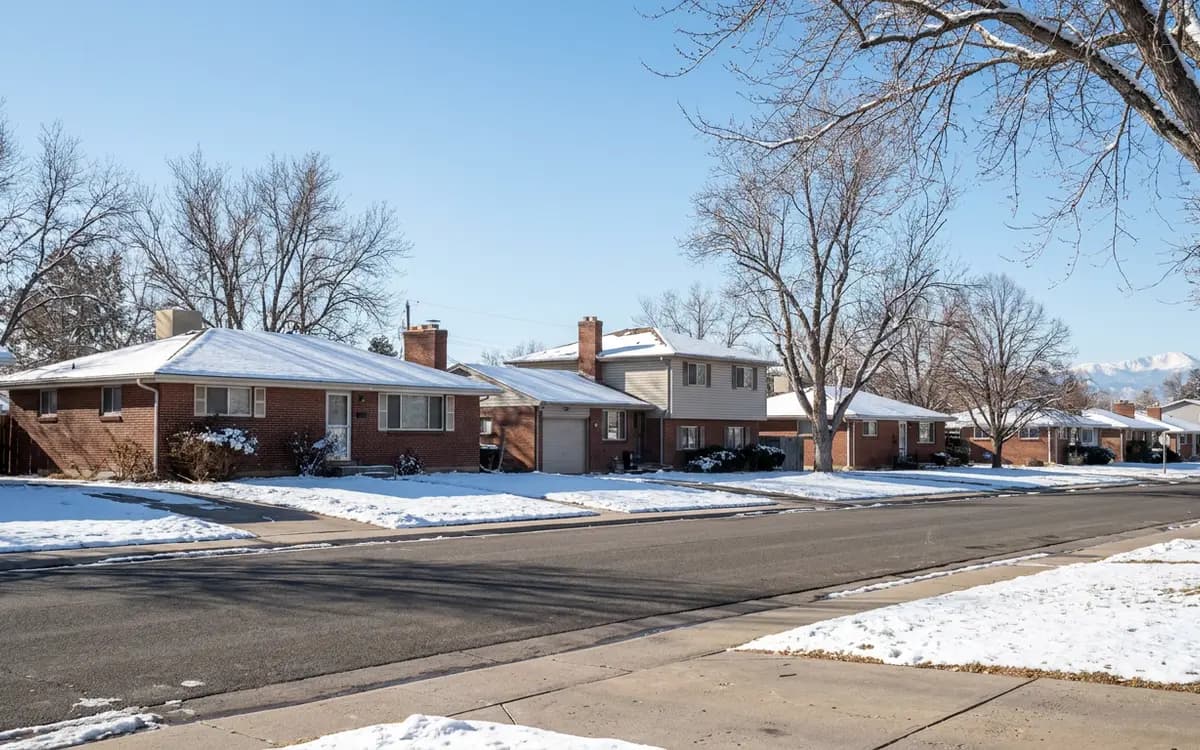
The odds are decent. In its ACS 2024 5-year estimates, the Census Bureau counts 152,377 housing units in Aurora, with a median year built of 1985. Homes built from 1970 to 1979 make up 23.3% of them. Homes built from 1980 to 1989 add another 23.9%. So nearly half the city came out of those two decades.
That's why this page reads like a checklist for that era. A house that has stood that long has often been changed along the way, with a finished basement, new windows, a swapped air conditioner or an addition over the garage, and every one of those changes shifts how much heat the house loses and gains. The furnace in the basement was picked for some version of your house.
Maybe not this one.
If you live in one of the newer Aurora neighborhoods, most of this still applies. Homes built in the 2000s account for 14.5% of the total, and homes from the 2010s account for 11.6%. Your duct conversation will just be shorter.
How should the new system be sized, if not by the old label?
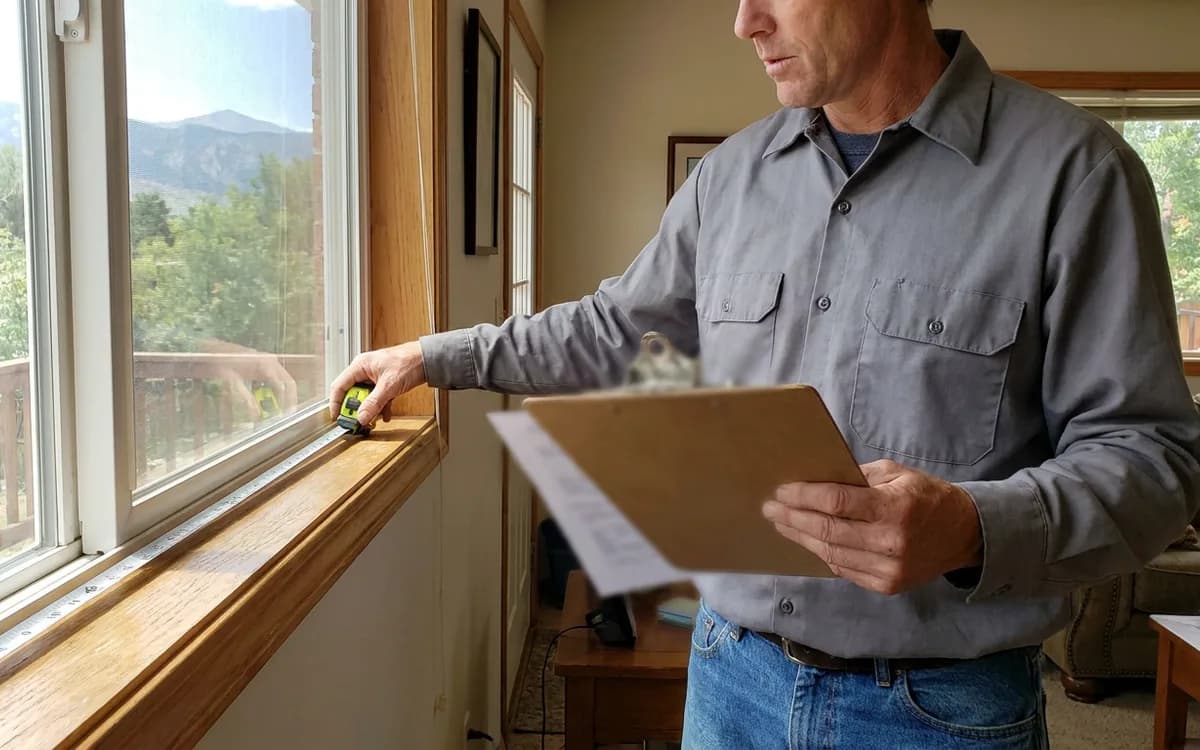
Start with a load calculation, not the nameplate on the old unit. The trade standard is a room-by-room Manual J calculation, which accounts for your walls, insulation, windows, the direction the house faces and how leaky it is, then tells the installer how much heating and cooling each room actually needs.
Matching the old unit's size is the shortcut. It's also how you inherit someone else's guess from decades ago. A heat pump that's badly oversized or undersized won't run the way it was designed to.
While they're measuring, a good installer should also look at:
- Whether your electrical panel has capacity for the heat pump, and whether you need a new circuit
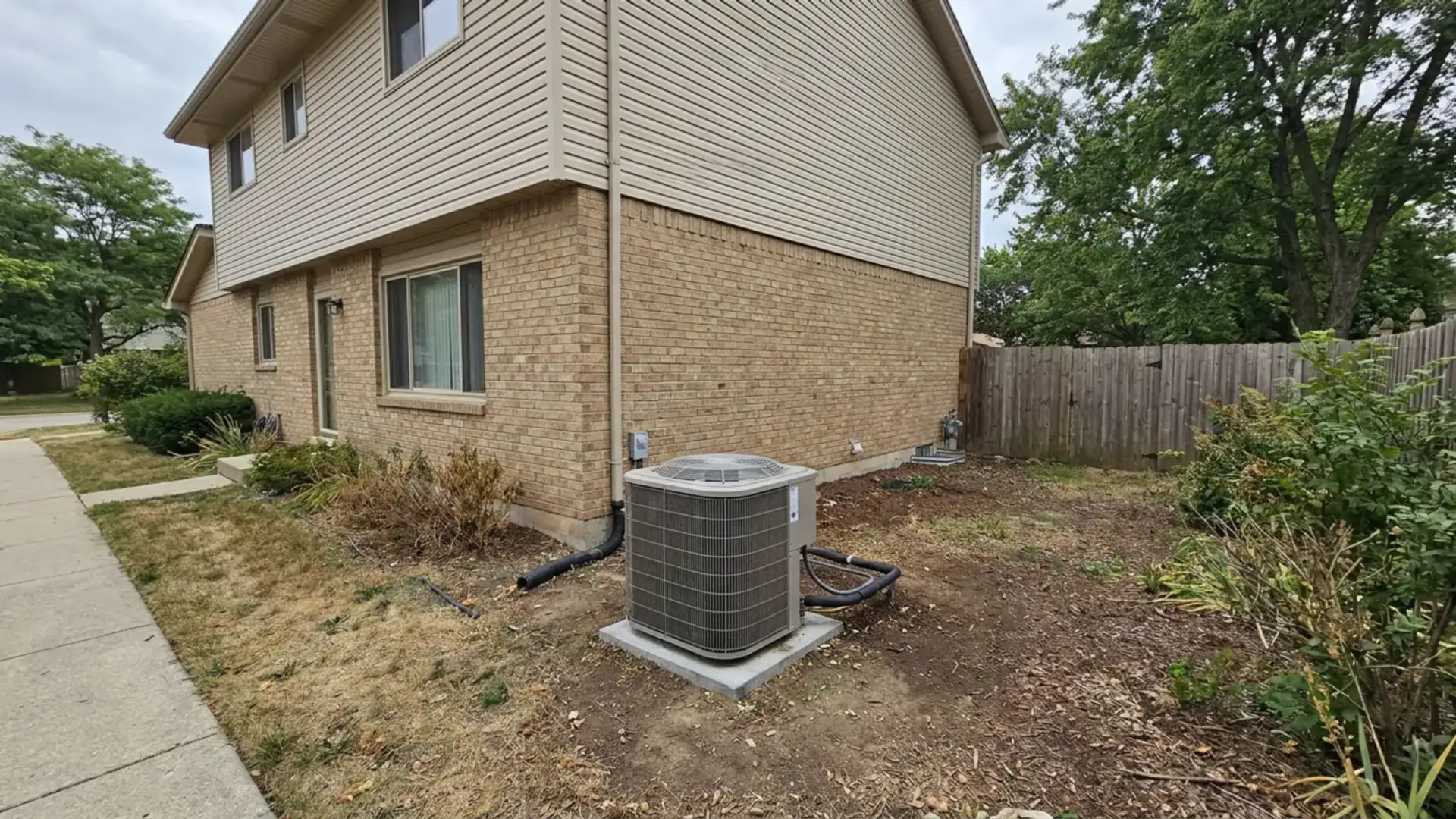
- Where the outdoor unit goes, with room for snow, drainage and clearance
- How the refrigerant lines will run from the outdoor unit to the indoor equipment
- Where the condensate will drain
Cold snaps are the real test. If you want the heat pump doing the heavy lifting in one, ask about cold-climate models. The Xcel 2026 rebate summary sets a specific bar for "cold-climate": at 5°F, the unit needs a coefficient of performance of at least 1.75, and its capacity at 5°F must also be at least 70% of its capacity at 47°F.
Compare every quote against that.
Do the original ducts and the gas furnace still have a job?
Often they do. Check anyway.
The ducts
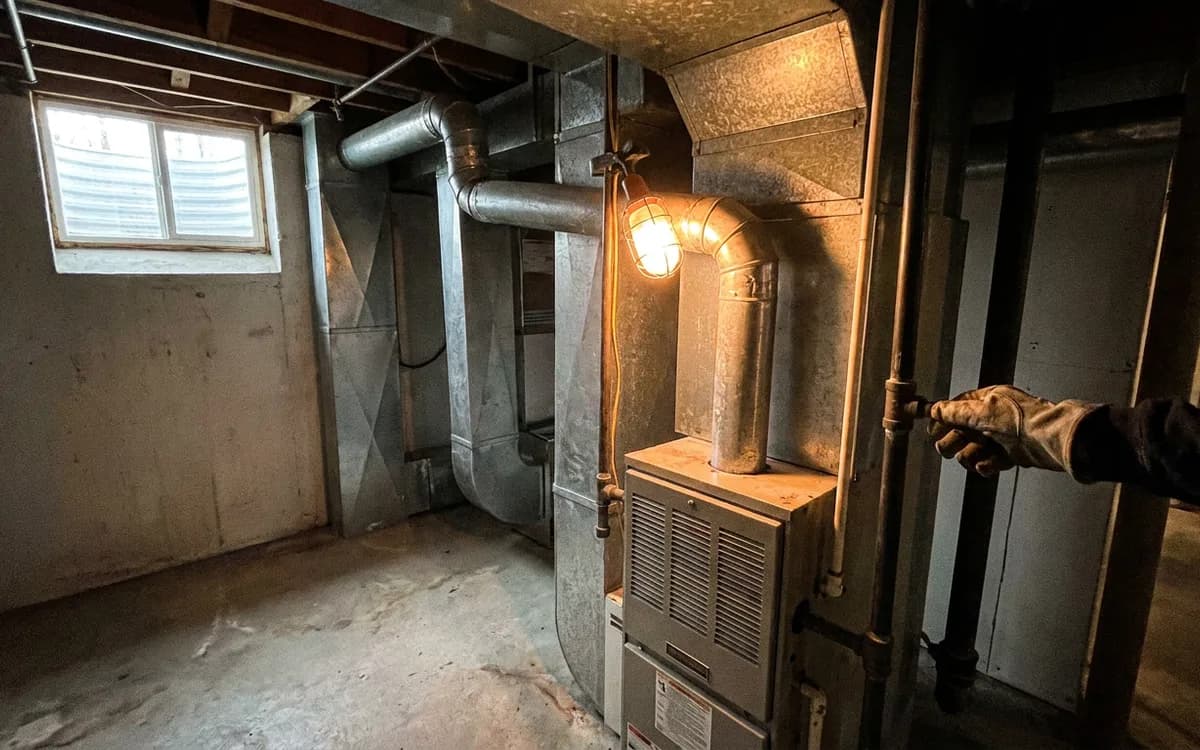
A ducted heat pump uses the ductwork you already have. In a house this age, the installer should look at duct sizing, duct condition and how well the runs reach each room before designing around them, and the load calculation will show where the ducts may need changes.
What if a finished basement or an addition never got good duct coverage? A ductless system is the other route. It uses indoor heads mounted in the rooms that need them, with no ducts involved. Some homes end up with a mix.
The furnace
You'll choose between two setups. With an all-electric setup, the heat pump handles all of your heating. With a dual-fuel setup, your gas furnace stays in place as backup.
There's one catch if you're counting on the state discount covered below. Colorado requires a space-heating heat pump to be designed to meet at least 80% of the home's annual heating need, which means that in a dual-fuel setup the heat pump can't be a token add-on sitting beside the furnace. Ask the installer how they will size it to clear that bar.
How can you check an installer against Aurora's own records?
Aurora runs its own Building Division. Its website has two tools you can use before signing anything: Contractor Licensing & Lookup, and a Permit Fee Calculator.
Here is how we would use them:
- Get the installer's exact business name. Use the name printed on their invoices, not a nickname.
- Search for that name in the Building Division contractor lookup and see what comes up.
- Ask whether your project needs a permit. If it does, ask who will pull it and under whose name.
- If the quote includes a permit line, run your project through the fee calculator to see whether the number looks reasonable.
Now our side of it. We describe the installers we connect people with as insured, and that is all we claim. We don't vouch for any city license on anyone's behalf. That is exactly why the lookup is worth a few minutes of your time.
One more thing. Before you rely on any of this, confirm that your parcel actually sits inside Aurora city limits, because permit rules follow the exact address, and what Denver, Centennial or any other city requires does not carry over. The Building Division or your installer can tell you what your specific project needs.
What does a 2026 install mean for rebates and credits?
Here is the short version, as of September 2026:
- For air-source heat pumps installed on or after Jan. 1, 2026, the Colorado heat pump credit is $1,000, and you're guaranteed at least $333 of it as a discount. Only state-registered contractors can claim the credit, and your share shows up on the invoice as a line labeled "State of Colorado Heat Pump Discount." Ask whether your installer is on the state's registered list, and look for that line on your invoice.
- If Xcel is your utility, per the Xcel 2026 rebate summary effective Oct. 1, 2026, a ducted cold-climate air-source heat pump earns $750 per heating ton at 5°F, or $1,500 with the bonus. The bonus requires an invoice dated in 2026 and is not available if your existing primary heat is electric. The rebate also requires an Xcel participating contractor. Confirm your utility by address before counting on it.
- The IRS federal credit covered improvements made through Dec. 31, 2025, so a 2026 install doesn't qualify. Take any tax questions to a tax professional.
The income-qualified single-family rebate from the state is also closed on the Front Range, according to the August 2026 state update. You'll find the full details in the Denver heat pump rebates guide. Pricing is covered in our Denver heat pump cost guide. Confirm eligibility with your utility or installer before you count on any of it.
What happens after you ask for an estimate?
You call (303) 529-8713 or fill out the form. We connect you with one independent, insured local installer. You don't get a bidding list.
Just one installer.
The installer comes out, looks at the house, runs the numbers and gives you a price. We don't set that price. They do, after seeing your ducts, your panel and your yard. The estimate is free, and you are under no obligation to go ahead.
Bring the questions from this page to that visit:
- How are they sizing the system?
- What did they find in the ducts?
- Does dual-fuel make sense for your house?
- Are they on the state registered list?
You'll learn a lot from how they answer.
Get Free Estimate. Not sure whether your address counts as Aurora? Check every town we cover, or see how heat pump installation works in Centennial.
Ask Away
Heat Pump Installation Questions
Who handles heat pump permits for a home in Aurora?
For addresses inside Aurora city limits, the Aurora Building Division handles permits. What your project needs depends on the exact address and scope of work. Confirm your parcel is actually in Aurora, then ask the Building Division or your installer what your job requires. Don't assume a rule from Denver or a neighboring city applies.
My Aurora home was built in the 1970s or 1980s. Can a heat pump use the existing ducts?
A ducted heat pump is designed to run through existing ductwork. In a house that age, though, the installer should check duct sizing, condition and room coverage and do a room-by-room load calculation before planning around them. Rooms the ducts never served well can use ductless indoor heads instead. You can get that checked at a free estimate through Heat Pump Installation Denver at (303) 529-8713.
How do I look up an installer's license with the City of Aurora?
The Aurora Building Division website has a Contractor Licensing & Lookup tool. Get the installer's exact business name, the one printed on their invoices, and search for it there before you sign. Heat Pump Installation Denver connects you with an insured local installer but doesn't vouch for any city license, so it's smart to check for yourself.
Should an older Aurora house keep its gas furnace as a heat pump backup?
You can choose between an all-electric setup and a dual-fuel setup that keeps the gas furnace as backup. To get the Colorado state heat pump discount for a 2026 install, a space-heating heat pump must be designed to meet at least 80% of the home's annual heating need, so it has to be sized properly either way. Your installer can walk you through both options at the free estimate. The dated incentive details are in the Denver heat pump rebates guide.
Thinking about a heat pump?
We'll connect you with one local, insured heat pump installer. They see the house, then set the price. No obligation to buy.